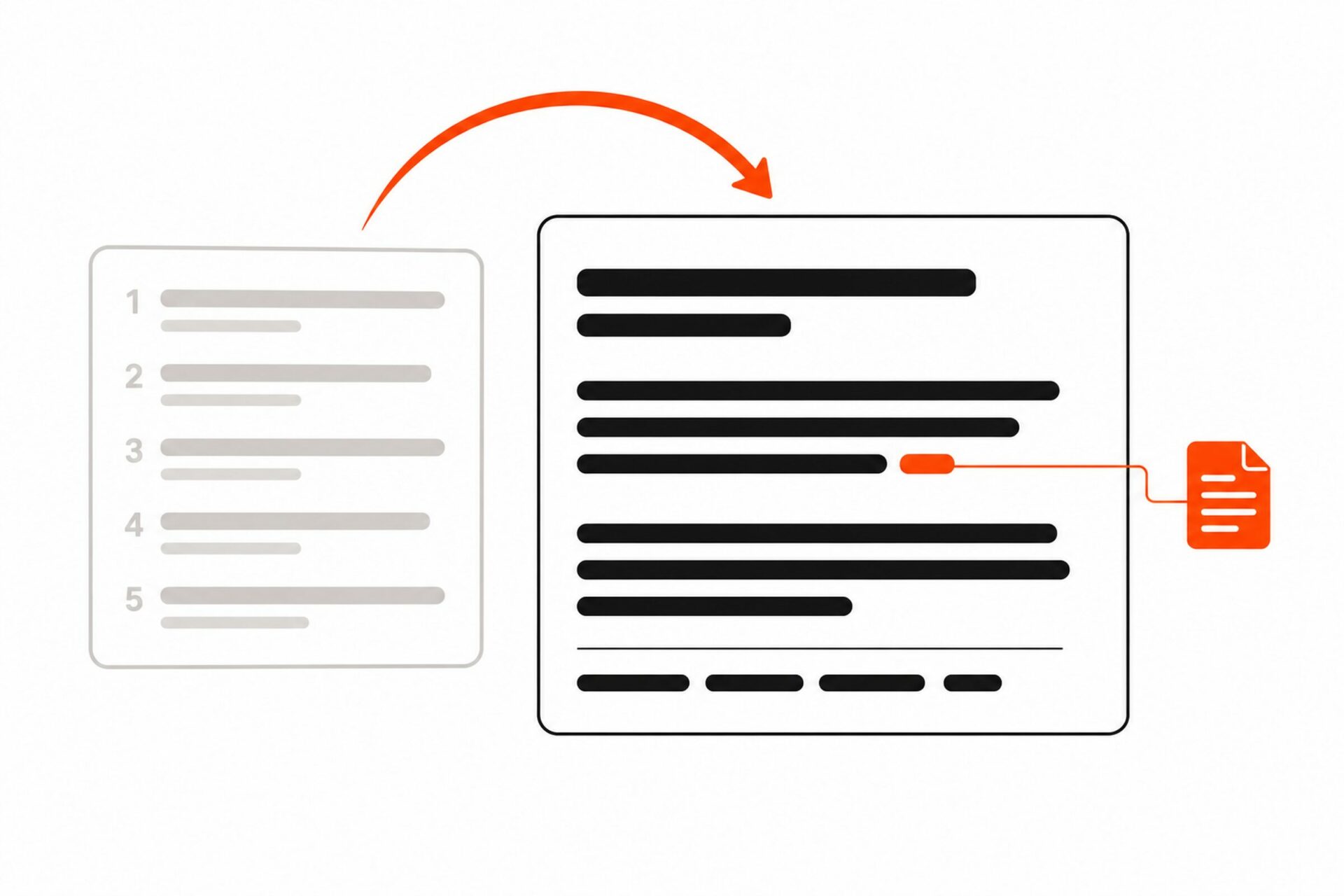
Search behaviour has shifted faster in the last 18 months than in the 18 years before. Customers who used to start at Google now start at ChatGPT, Perplexity, Gemini or Google’s own AI Overviews. The brands they end up trusting are the brands the AI engines decide to cite. That is the work GEO and AEO are about, and this page is HyperWeb’s working guide to both.
The short version: traditional SEO got you onto a page of results. GEO and AEO are about getting cited inside an answer. Different end product, different optimisation, same underlying goal of being the source customers find before they decide.
What GEO and AEO actually mean
GEO stands for Generative Engine Optimisation, the discipline of optimising your content so generative AI engines (ChatGPT, Claude, Perplexity, Gemini, Google AI Overviews) treat your business as a trustworthy source and quote you in their answers.
AEO stands for Answer Engine Optimisation, the broader discipline of structuring your content so that any answer engine, whether AI-generated or featured-snippet-style, can lift a clean, attributable answer straight from your page.
The two overlap considerably. AEO is closer to a refinement of classical SEO with answer-shaped content and structured data. GEO is more about being the brand a model has internalised as authoritative on a topic. We treat them as a single optimisation discipline at HyperWeb, with shared technical foundations and slightly different content emphases.
For the deeper definitional read, our piece on AEO vs GEO and why your SEO strategy needs both in 2026 goes line by line through where the two diverge and where they converge.
What changes when AI is in the loop
Three things change when a real person’s first stop is an AI engine instead of a Google results page.
First, the search query changes shape. A traditional Google search is short and keyword-heavy. An AI search is closer to a conversation. People type questions the way they would ask a colleague, with context attached. Optimising for keywords still matters, but the unit of optimisation moves up to the question.
Second, the unit of success changes. On a search results page, you wanted to be in the top three results. In an AI answer, you want to be cited as the source. Sometimes the user clicks through to read more. Sometimes they do not, which is the much-discussed zero-click problem. We have written about how that pattern is reshaping search in The Zero-Click Future of Search.
Third, the model has to know who you are before it can cite you. Traditional SEO assumes a fresh crawl. AI search assumes a model that has already absorbed the web at training time, then refreshes itself with current sources at answer time. Being in the model’s working understanding of your industry matters as much as the technical visibility of any single page. That is the entity layer of SEO, which we cover in Entity SEO: how search engines figured out what you actually are, not just what you say.
How HyperWeb approaches AI search optimisation
Our working framework comes down to five practical disciplines.
One: write content that answers questions cleanly. AI engines lift short, attributable passages. Posts that bury the answer under five paragraphs of preamble get skipped. Posts that lead with a clear answer and back it up get cited. Our piece on making your content citable covers what we tell clients about structure and tone.
Two: ship serious schema markup. Structured data is how machines confirm what a page is about and which sentence is the answer to which question. Most businesses still treat schema as an optional Yoast tickbox. We treat it as core infrastructure, especially FAQPage, Article, Organization and Service. The case is laid out in the structured data strategy most businesses are still ignoring.
Three: build the entity layer. Consistent business information across your website, Google Business Profile, Wikidata, LinkedIn and the major data aggregators tells AI engines who you are and where you operate. A consistent entity beats a louder one. Our entity SEO post above goes into the detail.
Four: decide which bots are allowed in. GPTBot, OAI-SearchBot, ClaudeBot, PerplexityBot, Googlebot and the rest each crawl your site under different terms. Letting them in is what makes citation possible. Blocking them removes you from AI answers entirely. We cover the strategic decision in GPTBot and your website: a strategic decision for the AI age.
Five: align your wider content strategy with how buyers actually search. The B2B awareness landscape has shifted from search-then-discover to ask-then-shortlist. We have written about what that means for content strategy in The B2B awareness landscape has changed and on the same shift from a customer-behaviour angle in Your next B2B customer won’t Google you, they’ll ask ChatGPT.
Where to read more
This page sits at the top of our AI search content cluster. The supporting articles below go into specific corners of the discipline.
To check where you stand today, run the 30-minute self-audit in Page 1 on Google, Invisible in ChatGPT. It is the fastest way to turn this guide from theory into a to-do list.
If you are new to GEO and AEO, start with How to get found in the AI and LLM farm for the broad overview, then read AEO vs GEO to understand where the disciplines diverge.
For the technical foundations, read Schema Markup: the structured data strategy most businesses are still ignoring and Entity SEO. These two together cover most of the technical work that makes citation possible.
For the strategic shift, read The Zero-Click Future of Search, Your next B2B customer won’t Google you, and The B2B awareness landscape has changed. These three describe how buyer behaviour has moved and what that does to your content strategy.
For tactical writing, read GEO in Practice: how to make your content citable.
For the bot access decision, read GPTBot and your website.
For the current state of the platform politics, our most recent piece is Google claims authority over GEO and AEO. Read the fine print.
Frequently asked questions
What is the difference between SEO, AEO and GEO?
SEO optimises your site to rank in a list of search results. AEO optimises your content so it can be lifted as a clean answer by any answer engine, including AI Overviews and featured snippets. GEO optimises your business and content so generative AI engines like ChatGPT, Claude and Perplexity treat you as a trusted source and cite you in their answers. The three are layered, not competing. A modern strategy uses all three.
Do I still need traditional SEO if I am optimising for AI search?
Yes. AI engines pull heavily from the same web that Google indexes. Pages that rank well in Google are also more likely to be retrieved as citation sources by ChatGPT, Perplexity and Gemini. The technical SEO foundations (clean site architecture, fast pages, working schema, internal linking) underpin both. AI search is a layer on top of strong SEO, not a replacement for it.
How long does it take for an AI engine to start citing my content?
For Perplexity and ChatGPT search, which fetch live web content at answer time, the lag is short. Once a page is indexed and ranking well for the relevant question, citation can follow within days. For the deeper model-level recognition (a model treating your brand as a known authority on a topic), the timeline is longer and depends on how often your name appears in authoritative sources over months. Both are accelerated by the same fundamentals: clear content, strong schema, a coherent entity, and external mentions in places the models trust.
Does HyperWeb offer GEO and AEO as a service?
Yes. We work with businesses to audit current visibility in AI search, fix the technical foundations (schema, entity consistency, bot access), and shape content so it is structured for citation. Our approach pairs traditional SEO with the AI-specific layers, since the two reinforce each other. Get in touch with the team for a conversation about your business.
Want to talk through how this applies to your business?
HyperWeb has been building digital strategies for businesses in Newcastle, the Hunter Region and beyond since 2000. AI search is a serious shift, but the work to be found in it is not magical. It is disciplined SEO, considered content, real schema, and a coherent picture of who you are as a business.
If you would like to talk through how this applies to your business, get in touch with the team. For our AI-application work more broadly, see our AI application integration service.
By Brendan Brooks, Founder and Managing Director of HyperWeb. Brendan has spent 25 years helping businesses turn their websites into working parts of the business.