
HyperWeb turned 25 last year. That milestone has had me looking back through our blog archives, to see what has changed over that time.
It’s Time to Play Digital Strategy was an article I wrote encouraging small businesses to stop treating digital as an afterthought and start approaching it as a genuine strategic discipline. I introduced a framework called AGAME (Awareness, Goals, Action, Monitor, Evaluate) and made the case that every business needed to have a digital plan.
Reading it back now is a strange experience. Some of it has aged remarkably well. Some of it reads like it’s from a completely different world, which in many ways it is. I was recommending businesses explore Twitter, FourSquare, Google+, and QR codes as part of their digital toolkit. Two of those platforms no longer exist in any meaningful form. One is a steaming bin fire.
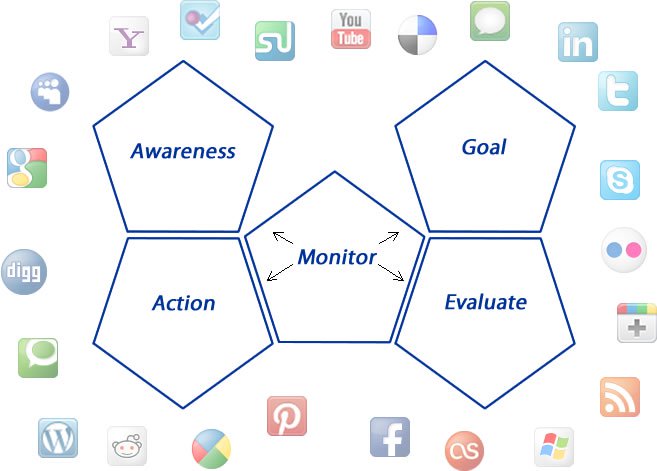
But the article’s underlying argument still holds. And the AGAME framework still works. So rather than archive that piece and move on, I want to use it as a lens to reflect on what the past 14 years have actually changed in digital strategy, and what has stayed surprisingly constant.
After 25 years in this industry, I’ve seen enough cycles to know that some things really do change everything, and some things only appear to.
What the Original Article Got Right
The 2012 article made three core arguments that I still stand behind completely.
The first was that digital tools require a strategy, not just adoption. The problem I was describing then (businesses chasing platforms without a plan) is still the most common digital mistake I see today. The platforms have changed. The problem hasn’t.
The second was that businesses needed to think of themselves as content producers, not just product or service providers. “Businesses need to position themselves as custodians and sharers of information around their field of expertise” was the exact phrase I used. In 2026, with content now the primary currency of both SEO and Generative Engine Optimisation (GEO), that has only become more true.
The third was that goals should drive digital activity, not the other way around. Your business goal doesn’t change because a new platform arrives. Your digital strategy serves the goal. That principle is timeless.
“The problem I was describing in 2012 (businesses chasing platforms without a plan) is still the most common digital mistake I see today. The platforms have changed. The problem hasn’t.”
What Has Changed Fundamentally
The honest answer is: almost everything else!
In 2012, digital strategy was largely about reach. Getting your message in front of more people across more platforms. The tools were relatively simple, the competitive environment was forgiving, and the pace of change, while it felt fast at the time, was considerably slower than what we’re navigating now.
Three shifts stand out as genuinely transformational.
1. AI has changed how customers find you
When I wrote the original article, Google was the uncontested gateway to the internet. SEO was about keywords, backlinks, and content volume. That model worked well for over a decade.
Today, a growing proportion of your potential customers are using AI-powered tools (Google AI Overviews, ChatGPT, Perplexity, and others) to research products, compare service providers, and make purchasing decisions. These tools don’t just return links. They synthesise information and recommend specific businesses. The criteria for being recommended are different from the criteria for ranking in traditional search.
This is what we now call GEO, or Generative Engine Optimisation. It involves structured data, entity optimisation, authoritative content, and clear business information signals. For any SMB that relies on being found online, GEO is no longer optional. It’s a core part of a modern digital strategy.
2. AI has changed how you run your business
In 2012, I was recommending businesses look at project management tools, cloud storage, and basic CRM systems as ways to improve workflow. The efficiency gains available were real, but incremental.
The AI-powered tools available to SMBs today are categorically different. AI-assisted content production, AI-assisted task completion, automated email sequences, conversational AI on websites, AI-powered analytics, automated customer service: none of these are marginal improvements. For businesses that deploy them thoughtfully, they represent a structural cost and capability advantage. The gap between businesses that have integrated AI into their operations and those that haven’t is already visible. Over the next few years, it will become defining.
3. The stakes have risen
In 2012, not having a digital strategy meant leaving some growth on the table. In 2026, it means ceding ground to competitors who do. Customer acquisition costs are up. Buyers are taking longer and doing more independent research before they engage. Margins in most sectors are under pressure.
In that environment, every dollar of digital investment needs to work harder. The businesses that get the best return are, without exception, the ones with a clear strategy, not just active social accounts and a website they haven’t reviewed in three years.
What Hasn’t Changed: The AGAME Framework Revisited
When I look back at the AGAME framework, I’m a little surprised by how well the structure has held up, even as the content within each step has transformed. Let me walk through it with the benefit of 14 more years.
A – Awareness
In 2012, awareness meant taking stock of your business internally (who you are, what you do, how you operate) and externally (what tools and platforms were emerging that could help you).
That internal/external structure is still exactly right. What’s changed is the depth and urgency of the external scan.
Today, external awareness needs to include: how AI is changing search behaviour in your category; where competitors are deploying automation or AI-generated content; what customers now expect in terms of digital experience; and which tools have emerged in the past 12 months that weren’t available before. In fact, what tools have emerge in the past few weeks, and what new functions and capabilities have they released this week!
The businesses I see falling behind aren’t unaware that AI exists. They’re unaware of how specifically it’s affecting their category, and how much their competitors have already moved. That’s the awareness gap that matters.
G – Goals
This step has changed the least. Your digital goals should be anchored to your business goals. That was true in 2012, and it’s true now.
What I’d add today is the importance of specificity. “Get more customers online” is not a goal. “Increase qualified leads from organic and AI search by 30% over 12 months” is. “Be the business that AI recommends when someone in our region searches for our service” is increasingly becoming a measurable and achievable goal for businesses that invest in GEO.
I’d also encourage thinking across three horizons: visibility (can the right people find you?), conversion (when they find you, do they act?), and retention (are you using digital to keep customers and generate referrals?). Goals in all three areas compound over time.
A – Action Plan
The five categories from the original article (customers, workflow, intelligence, people, and positioning) are still a sound way to organise a digital action plan. The tools within each have simply changed significantly.
For customers: paid search remains highly effective but requires genuine expertise as AI bidding has made campaigns simultaneously more powerful and more complex. Social advertising on LinkedIn and Meta is essential for most categories. And GEO has joined SEO as a core visibility discipline that should feature in every business’s action plan.
For workflow: the efficiency gains from AI and automation are now substantial enough to materially affect your cost base. Project management, AI-assisted content, task automation, automated email, CRM automation – identify the highest-friction areas first and solve those.
For intelligence: data has never been more available, or more underused. Google Analytics 4, CRM data, ad platform reporting – build a culture of reviewing this regularly. The businesses that make data-informed decisions have a compounding advantage over those that go on instinct alone.
For people: the tools of team communication and collaboration have matured enormously. AI productivity tools are now genuinely useful for client-facing and content-producing roles. The time saving is real.
For positioning: this is where the biggest shift has occurred. In 2012, positioning meant having a blog. In 2026, it means a deliberate content strategy that serves human readers, traditional search, and AI systems simultaneously. It means SEO, GEO, LinkedIn thought leadership, and email marketing working together. Every piece of content you publish is a signal to search engines, to AI systems, and to potential customers about whether you’re worth paying attention to.
“Every piece of content you publish is a signal to search engines, to AI systems, and to potential customers about whether you’re worth paying attention to.”
M – Monitor
Monitoring was important in 2012. It’s critical now. Digital environments move faster, and a strategy that’s performing well in one quarter can need adjustment by the next.
The original article made a point I still use with clients: tools should be used to achieve efficiency, not for the sake of the tool. If something isn’t working, and you’ve given it enough time, stop or change your approach. That instinct is more important now than ever, given the volume of tools and platforms competing for attention and budget.
Structure your monitoring. Agree on the metrics before you launch. Review paid channels weekly. Review broader strategy monthly. Don’t wait until the end of the year to find out something stopped working in March.
E – Evaluate
Evaluation closes the loop and restarts the cycle. This hasn’t changed at all.
What I’d add is that the evaluation conversation has become richer because the data available is so much better. You can now trace a customer’s journey from first AI-generated search result to final conversion with a precision that wasn’t possible in 2012. Use that. Let evaluation inform not just tactics, but the goals you set in the next cycle.
A Note on Perspective
Looking back at that 2012 article, I notice something else: the tone of urgency. “This is the year when small to medium enterprises finally realise that they need to take advantage of digital tools,” I wrote. I’ve written some version of that sentence almost every year since.
Each year, the urgency has been real. And each year, a portion of businesses have taken it seriously, gained an advantage, and pulled ahead. The ones that didn’t find themselves catching up at increasing cost.
2026 feels different in scale, not in kind. The AI transition is the most significant shift I’ve seen in 25 years of digital business, bigger than the move to mobile, bigger than the rise of social media. But the strategic response is the same as it’s always been: get aware, set clear goals, build an action plan, monitor performance, and evaluate honestly.
The game has changed. The way to play it well hasn’t.